Canadian Voting Intentions: Liberals Lead Conservatives by 12 Points
Liberals Ahead After Trade Talks Collapse
Key Findings
- Liberals lead Conservatives by 12 points nationally
- The largest divides are education and age
- Regional differences are substantial, with the Liberal lead ranging from 22.7 points in Atlantic Canada to 3.4 points in the West
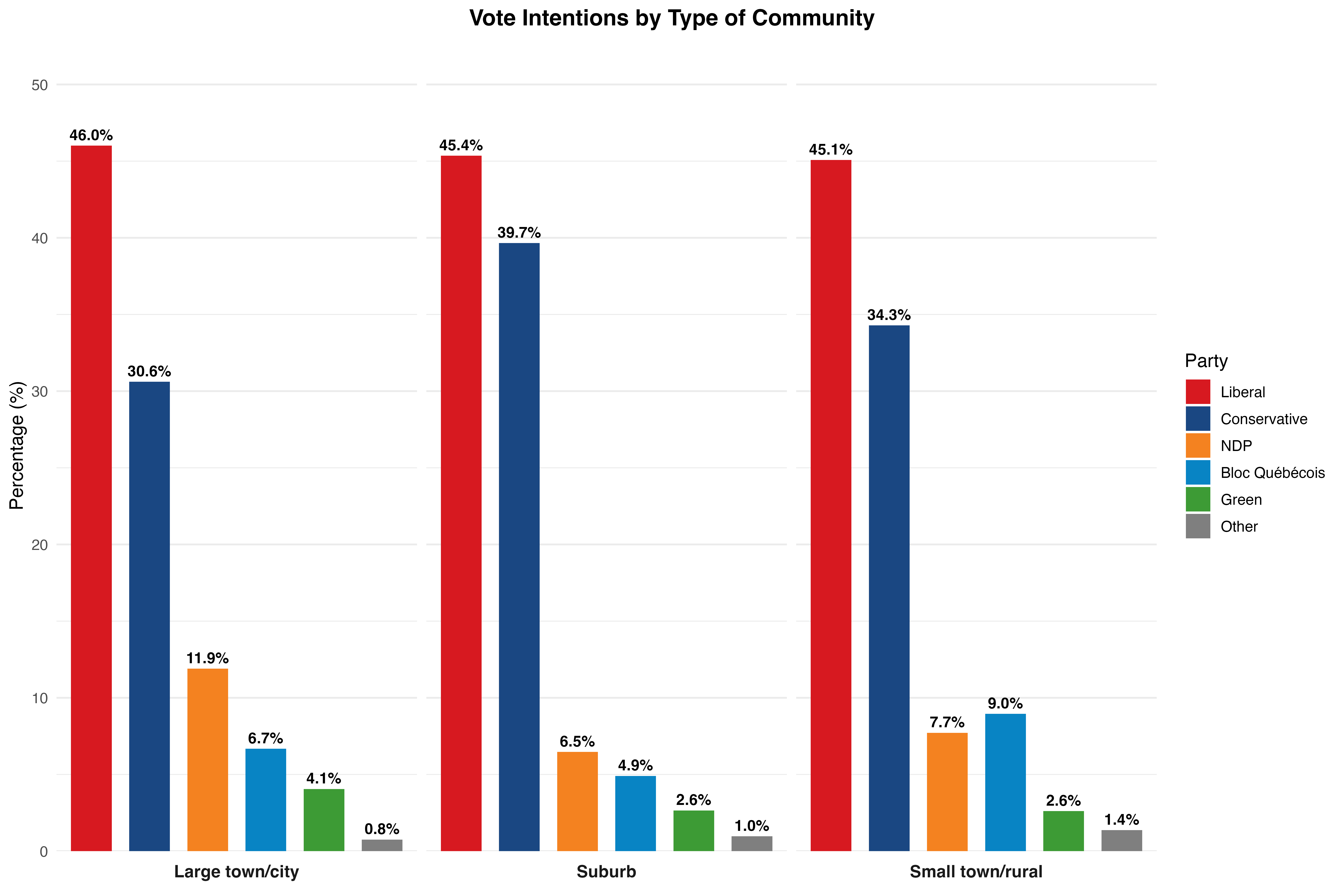
- Community-type differences are smaller, although Conservative support is higher in suburbs and small towns/rural areas than in large towns and cities
- Gender differences are minimal
The Liberals lead the Conservatives 45.6% to 33.9% in the latest Empirical Intelligence survey of Canadian citizens (N=1,004), a 12-point lead. The survey was conducted August 21–23, 2026, just as trade negotiations between Canada and the United States fell apart.
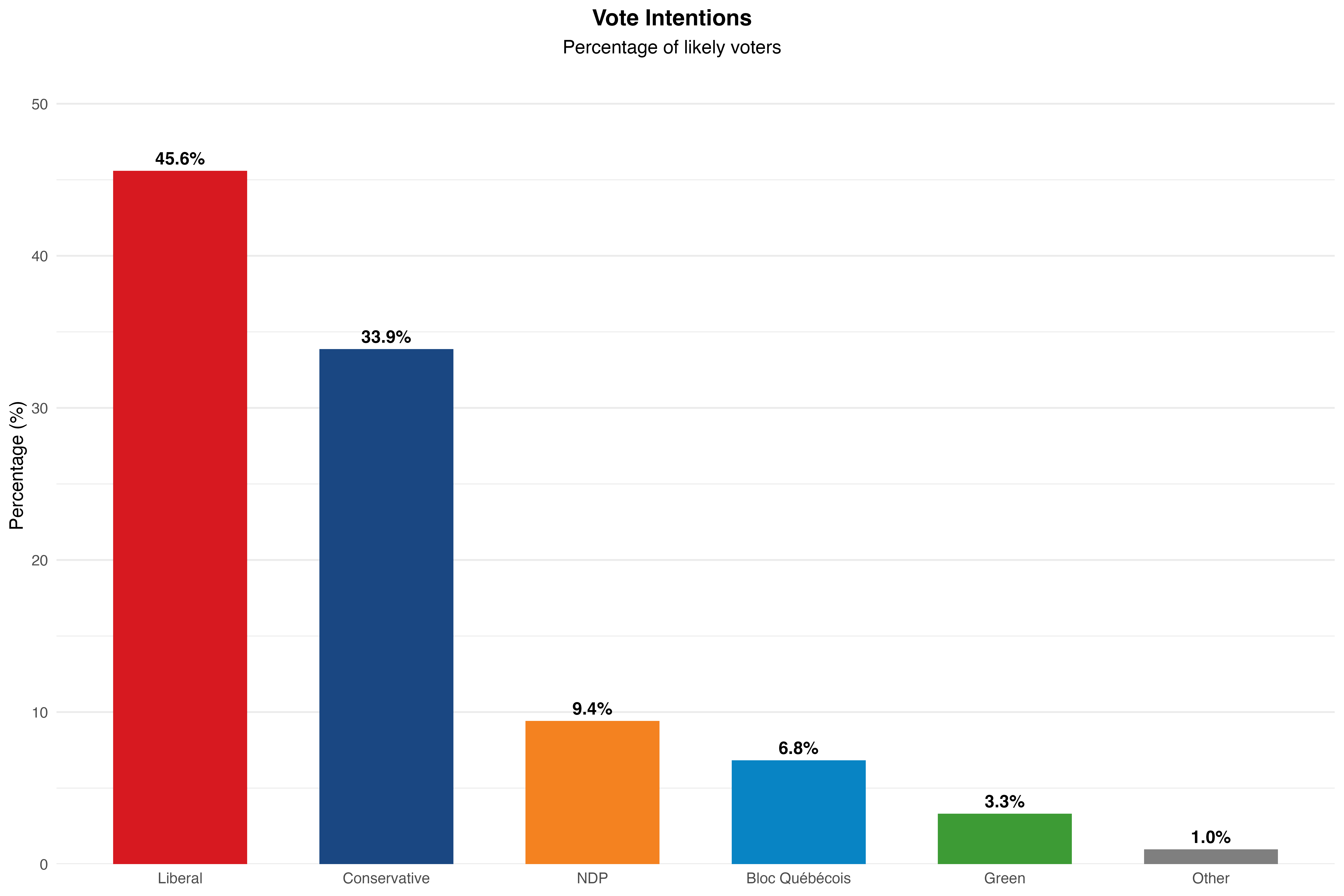
The national result masks substantial differences by education, age, and region.
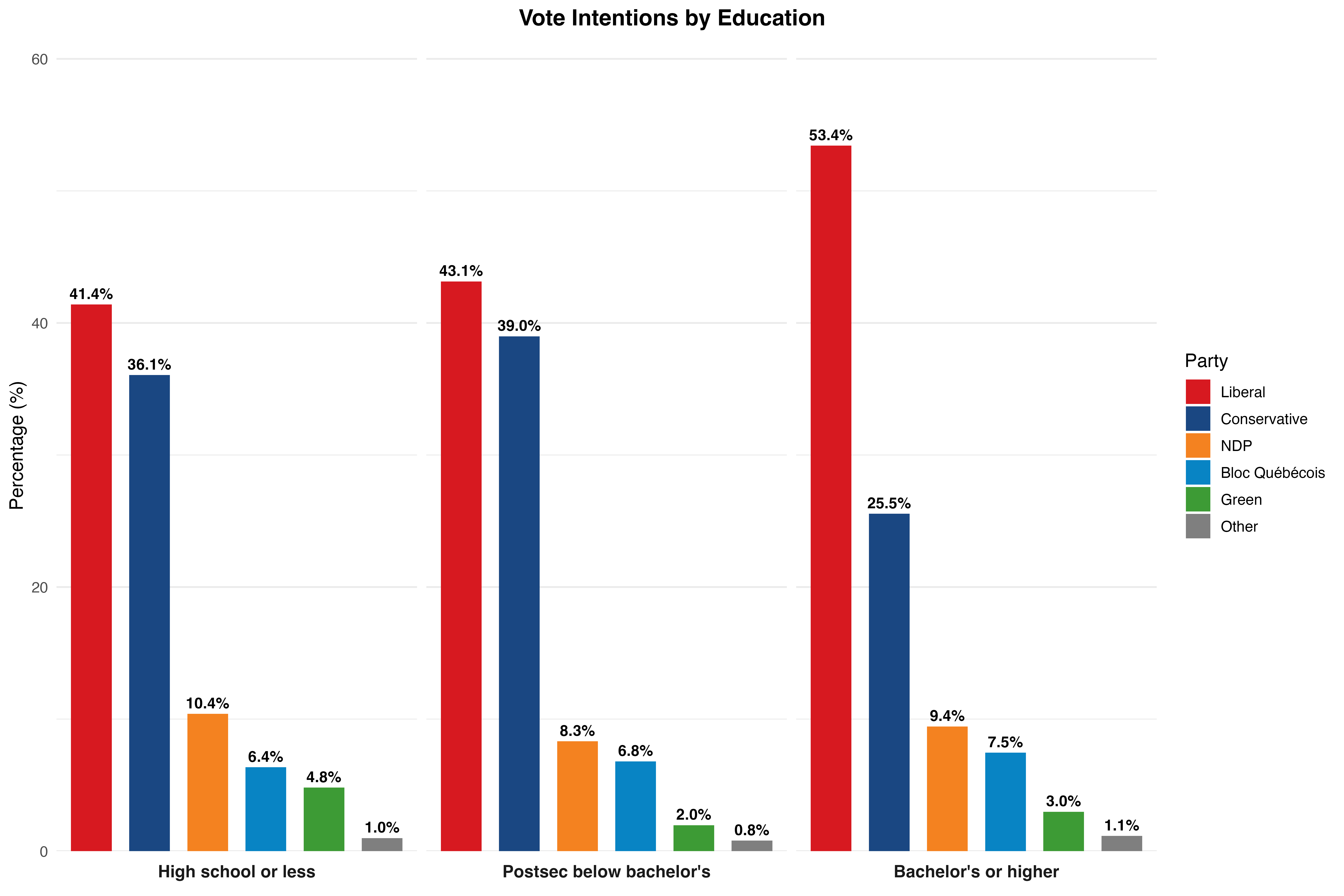
Education is one of the biggest divides in Canadian voting intentions
The Liberals lead the Conservatives by 27.9 points among university graduates, but by only 5.3 points among Canadians with a high school education or less, a difference of 22.6 points.
The biggest difference appears between Canadians with and without a university degree. The Liberal lead is similar among respondents with high school or less education and those with postsecondary education below a bachelor's degree.
Age is a major divide in voting intentions
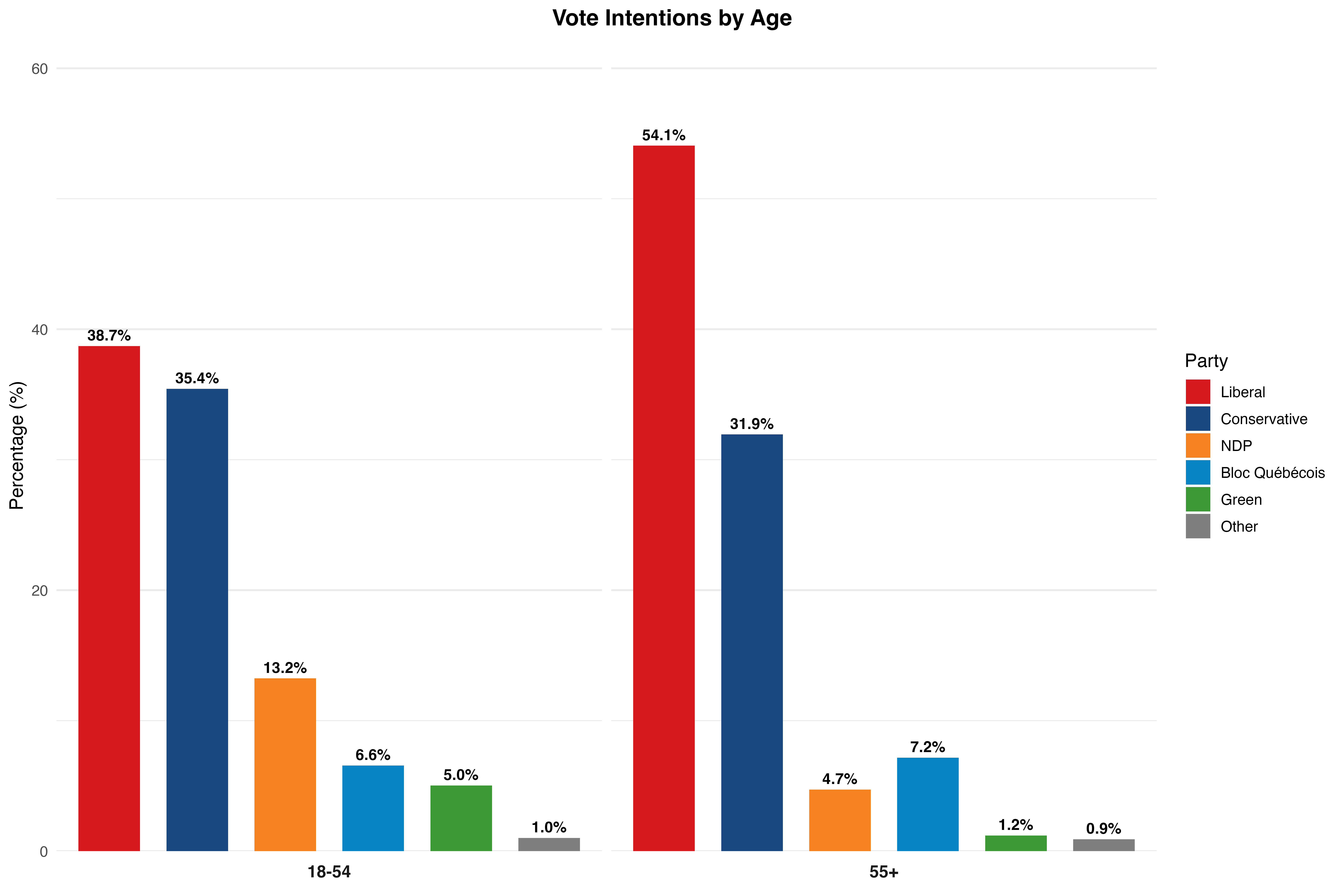
The Liberals lead the Conservatives by 22.2 points among Canadians aged 55 and over, compared with just 3.3 points among those aged 18 to 54.
The age divide is also apparent in support for smaller parties: NDP support is 8.5 points higher among Canadians aged 18–54, while Green support is 3.8 points higher.
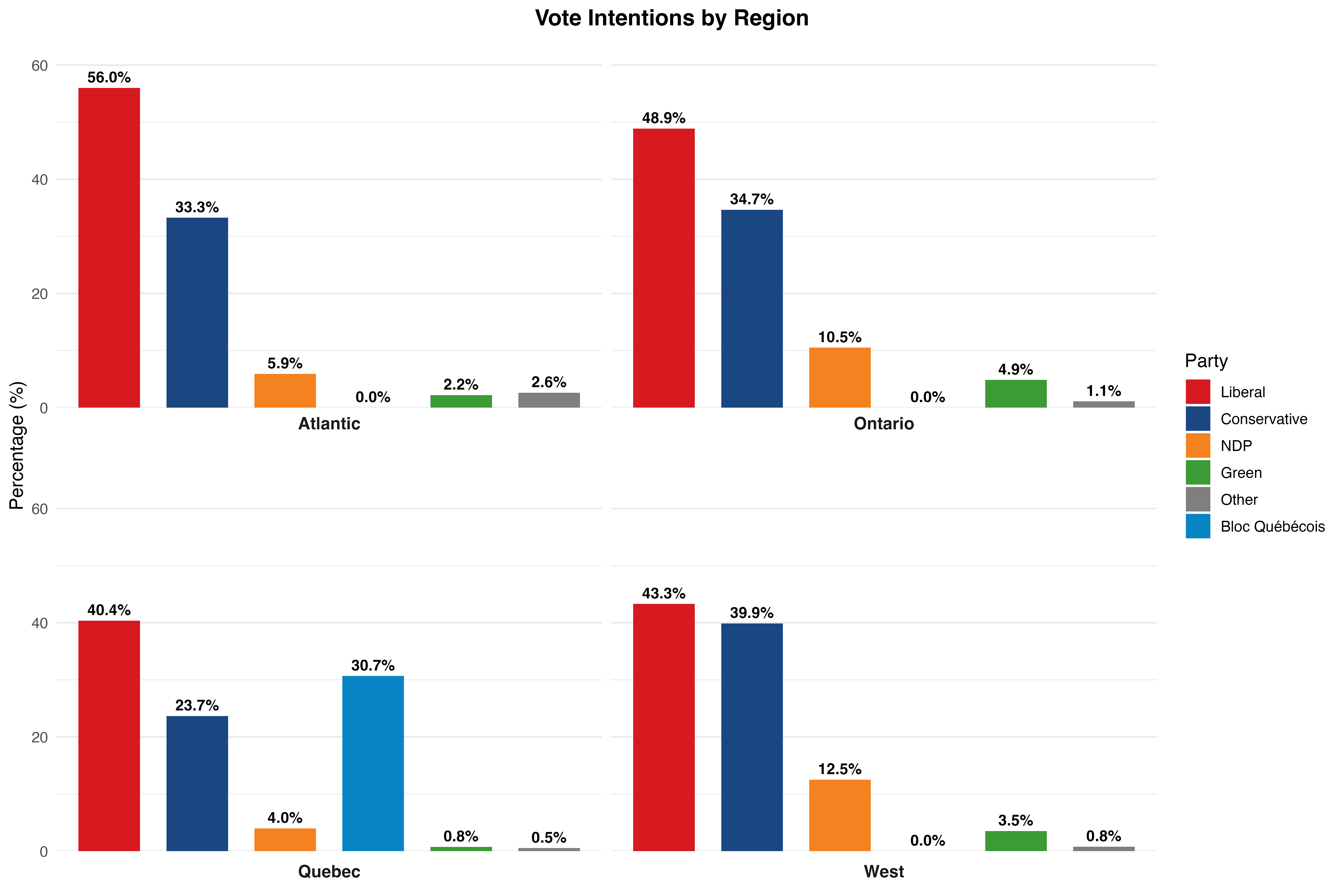
Regional differences in voting intentions are substantial
Liberal support ranges from 56.0% in Atlantic Canada to 40.4% in Quebec, while Conservative support is considerably more consistent, ranging from 33.3% in Atlantic Canada to 39.9% in the West. As a result, the Liberal advantage ranges from 22.7 points in Atlantic Canada to just 3.4 points in the West. NDP support is highest in the West and Ontario.
Differences by community type are smaller than the differences by age, education, or region
Liberal support is remarkably consistent, ranging from 45.1% to 46.0%. The main difference is Conservative support, which is 39.7% in suburbs compared with 30.6% in large towns and cities. NDP support shows the opposite pattern, reaching 11.9% in large towns and cities compared with 6.5% in suburbs.
Gender differences are small
Liberal and Conservative support differ by only 2.5 and 1.4 points respectively between men and women. The largest difference is in NDP support, which is three points higher among women than men.
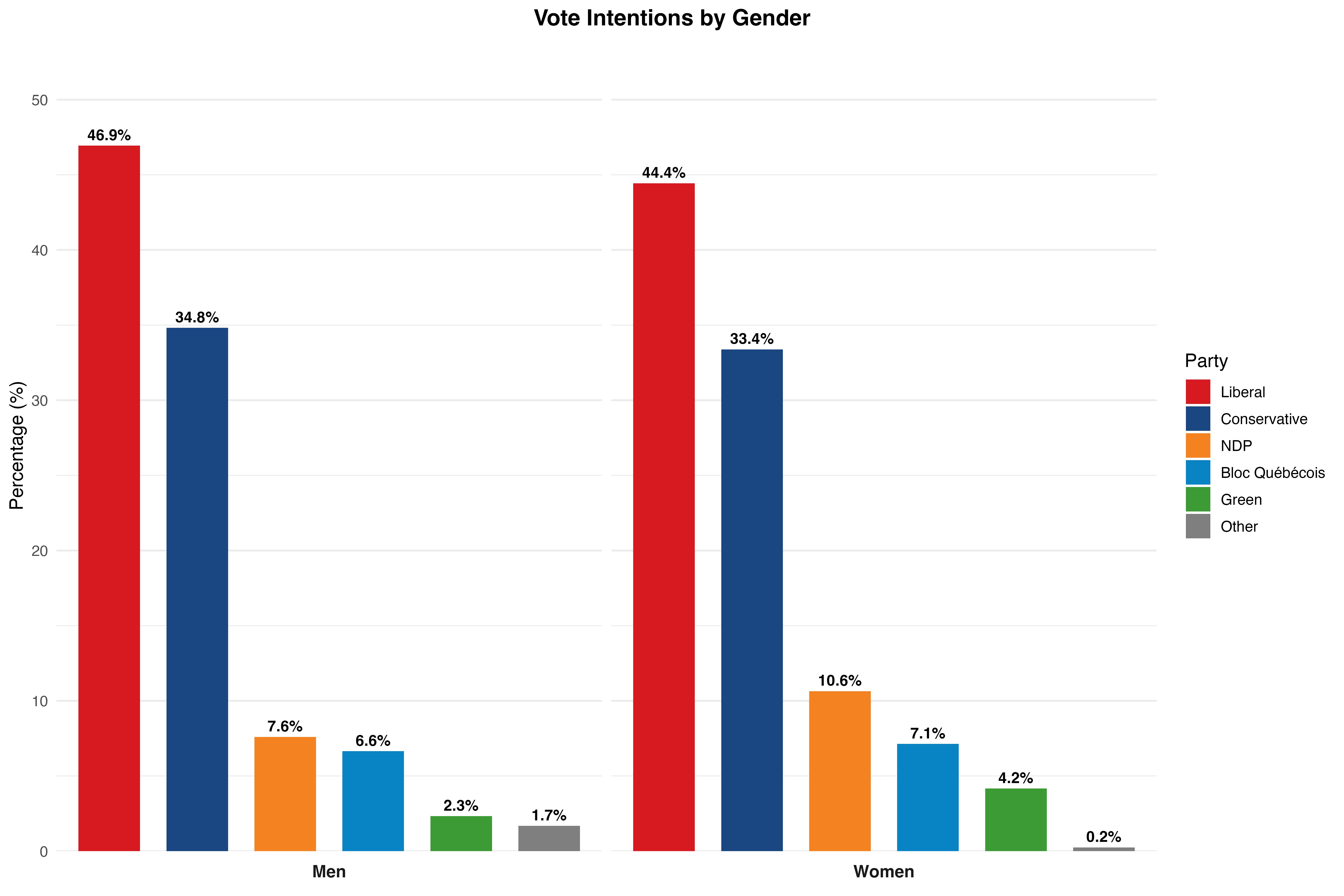
Note: There weren’t enough respondents in other gender categories to calculate percentages for them.
The key finding is that the 12-point national Liberal lead masks substantial variation across the electorate. The largest divides are associated with education, age, and region, while differences by gender and community type are comparatively modest.
Methodology
Sample: 1,004 Canadian citizens aged 18 and over. The survey was run online on August 21-23, 2026. Respondents were recruited from a variety of online panels using Cint Exchange. Results are weighted to Census benchmarks for age, gender, education, and region, and then weighted halfway toward 2025 federal election results using respondents' recalled vote. If the results were from a probability sample, the margin of error would be 3.1 percentage points, 19 times out of 20. Interviews were in English and French.